
Simple Global Recipes You Can Easily Make at Home: A Culinary Exploration
Simple Global Recipes You Can Easily Make at Home: A Culinary Exploration
In an era defined by globalization, our palates have never been more adventurous. The desire to explore cultures through cuisine offers both a delicious and enriching experience. Yet, the prospect of recreating global dishes at home can sometimes seem daunting, compounded by unfamiliar ingredients and complex methods. However, simplicity combined with authenticity is entirely achievable with the right approach. This article uncovers practical perspectives on making global recipes accessible and enjoyable in your own kitchen.
Why Choose Simple Global Recipes?
The appeal of ethnic cuisines is undeniable—each dish tells a story of tradition, climate, and community. But complexity should not be a barrier. Simple recipes allow home cooks to capture the essence of a culture’s culinary identity without requiring professional skills or obscure ingredients. Moreover, simplicity encourages experimentation and adaptation, fostering a personal connection with the food.
Key Principles for Adapting Global Recipes at Home
To succeed with global cooking, focus on three principles: ingredient accessibility, balanced flavors, and straightforward techniques.
- Ingredient Accessibility: Many global dishes rely on a few fresh staples and distinctive spices. Identifying local substitutes or obtaining essential ingredients online ensures authenticity while maintaining practicality.
- Balanced Flavors: Each cuisine balances saltiness, acidity, richness, and spice differently. Understanding these flavor foundations allows for meaningful improvisation without losing the dish’s character.
- Straightforward Techniques: Many traditional recipes emanate from time-saving methods and everyday practicality. Emphasizing simple cooking approaches respects the spirit of the cuisine and enhances the cook’s confidence.
Exploring a Few Timeless, Simple Global Recipes
Below are exemplars from different continents that illustrate how global cooking can be both easy and authentic.
Shakshuka (North Africa/Middle East)
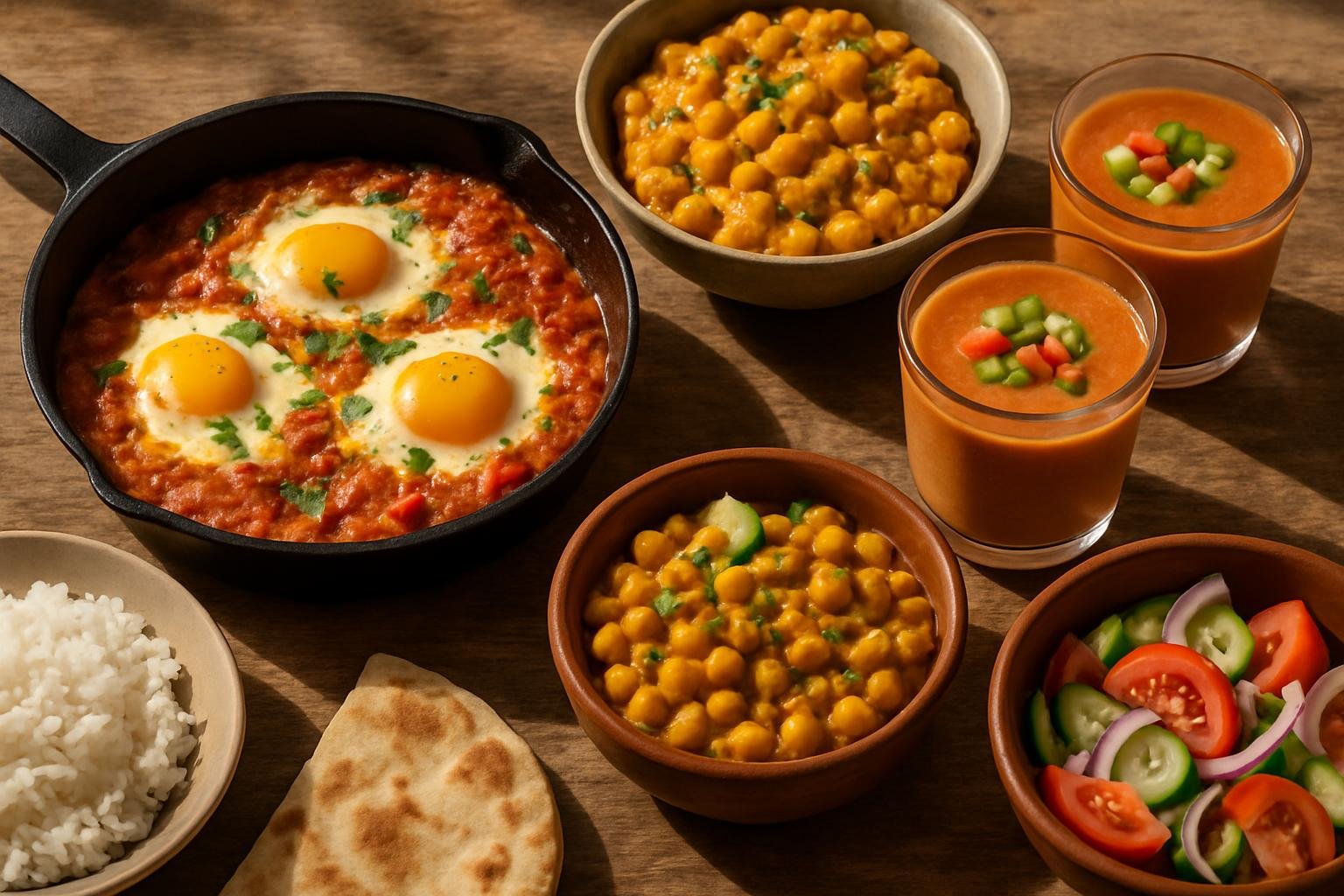
A vibrant tomato and pepper stew with gently poached eggs, Shakshuka requires minimal ingredients—tomatoes, onions, garlic, bell peppers, and eggs—combined with cumin and paprika. It embodies simplicity and boldness, making it ideal for breakfast or dinner.
Chana Masala (South Asia)
This comforting chickpea curry uses canned chickpeas, tomatoes, onions, and a handful of aromatic spices such as garam masala, coriander, and turmeric. It exemplifies how legumes can transform into a hearty, global household staple without complex preparations.
Spanish Gazpacho
This cold tomato and vegetable soup blends fresh produce like tomatoes, cucumbers, bell peppers, and olive oil. It celebrates the freshness of ingredients and requires only blending and chilling, perfect for warm climates or quick lunches.
Practical Tips for a Successful Global Cooking Journey
Experimentation is the heart of culinary discovery. Start small by incorporating one global recipe per week. Focus on mastering one cuisine at a time, gradually building a repertoire. Invest in basic spices that have multiple uses across cuisines, such as cumin, chili powder, and coriander seeds.
Equally important is understanding flavor pairings and balance. Taste as you go, adjusting salt, acidity (via lemon or vinegar), or heat to replicate authentic profiles while tailoring to personal preference. Keep recipes segmented into manageable steps and prioritize fresh ingredients over complexity.
Conclusion: Embracing Simplicity in Global Cooking
Bringing the world’s flavors into your kitchen need not be intimidating. Through simple, thoughtfully selected recipes and an understanding of foundational cooking principles, anyone can explore global cuisines with confidence and joy. This practice enriches daily meals and fosters a deeper appreciation for cultural diversity conveyed through food. By focusing on accessibility, balance, and uncomplicated methods, global recipes become not just meals but gateways to understanding and celebration.